
The fade haircut has officially cemented its status as one of the most versatile and enduring men’s fade hairstyles in grooming. As we navigate through 2026, the debate between the low fade vs. high fade haircut remains the most common dilemma for men sitting in the barber’s chair. This critical decision, often involving a low fade high fade haircut, shapes one’s overall look. Whether you are aiming for a professional boardroom look or a sharp, street-style aesthetic, understanding the technical differences between these two styles is the secret to a perfect haircut.
Choosing the right fade is not just about following trends; it is about geometry. Your face shape, hair texture, and how much time you are willing to spend styling your hair each morning play a massive role in which fade will look best on you. In this comprehensive guide, we will break down everything you need to know to make an informed decision for your next barber consultation, ensuring you get the perfect low fade high fade haircut.
Understanding the Anatomy of a Fade
At its core, a fade, often referred to as a taper fade, is a technique where the hair is tapered from a shorter length at the bottom to a longer length as you move up toward the crown. The “height” of the fade refers to where this transition begins on your head. Understanding this is key to choosing your ideal low fade high fade haircut.
What is a Low Fade?
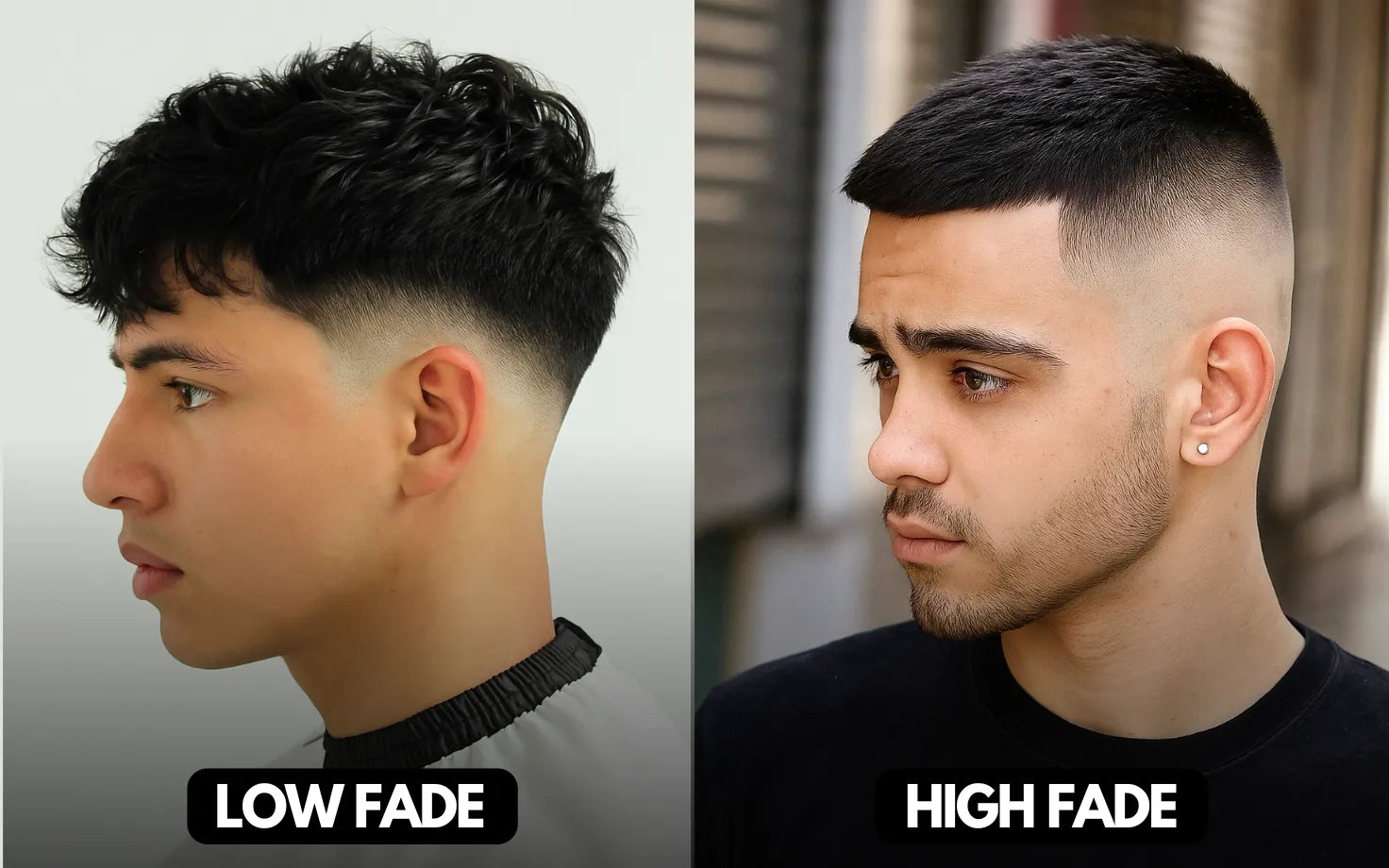
A low fade haircut is characterized by a subtle taper that begins just above the ears and follows the natural hairline. It is often described as the “gentleman’s fade” because it offers a clean, groomed appearance without exposing too much skin, making it a truly classic fade haircut. It is the perfect entry point for those who are new to fades or for professionals who need to maintain a conservative look.
What is a High Fade?
A high fade haircut is the polar opposite of the low fade. It starts much higher, typically reaching up toward the temples or the crown area. This creates a high-contrast, aggressive look that is bold and undeniably modern. Often executed as a skin fade or bald fade, it removes a significant amount of hair on the sides, embodying the popular “short sides, long top” aesthetic. This draws immediate attention to the hair on top, making it an excellent choice for men who want to showcase a pompadour, a quiff, or textured curls.
The Low Fade: Sophistication Meets Subtlety
The low fade is widely considered the most natural-looking fade in the modern barbering repertoire, offering a subtle transition that contrasts with the more pronounced mid fade haircut.
Who Should Choose a Low Fade?
If you have a round or oval face shape, a low fade is a fantastic option. Because it doesn’t add height to the sides of your head, it prevents your face from appearing wider. It is also the ideal choice for men with thicker, coarser hair, as it keeps the sides tight without creating that “poofy” look that can occur when the hair is cut too short too quickly.
Styling Tips for the Low Fade
Maintenance: Since the fade starts low, you can often go longer between haircuts compared to a high fade.
Versatility: It pairs perfectly with a beard. A low fade can transition seamlessly into a beard fade, creating a cohesive look that connects your sideburns to your facial hair.
Product: Use a light matte clay or a cream to keep the top styled without looking greasy.
The High Fade: Bold, Sharp, and Modern
If you are looking to make a statement in 2026, the high fade is your best friend. This style is all about high-contrast grooming. By skin-fading the sides up to the crown, you create an architectural look that emphasizes the hair on top.
The Benefits of a High Fade
- Cleaner Aesthetic: The high fade keeps the sides extremely tight for a longer period, making it a low-maintenance option for those who hate “outgrown” hair.
- Face Elongation: If you have a rounder face and want to create the illusion of a more angular, elongated jawline, the high fade is the ultimate tool.
- Highlighting Texture: Whether you have tight coils, loose waves, or straight hair, the high fade acts as a frame, forcing the eye to focus on the volume and texture of your hair.
The High Fade and Your Lifestyle
The high fade is the go-to style for athletes and active individuals. Because the hair is kept so short, it is incredibly easy to manage during intense workouts or in humid climates. However, be aware that this style requires more frequent trips to the barber—typically every 10 to 14 days—to keep that sharp, skin-tight transition looking fresh.
Low Fade vs. High Fade: The Comparison Breakdown
To help you decide which low fade high fade haircut suits you best, let’s look at how these two styles compare across critical categories.
| Feature | Low Fade | High Fade |
| :— | :— | :— |
| Transition Point | Just above the ears | Near the temples/crown |
| Contrast Level | Subtle/Natural | Bold/Aggressive |
| Face Shape Suitability | Round, Oval, Square | Round, Heart, Diamond |
| Maintenance Frequency | Moderate (3-4 weeks) | High (1-2 weeks) |
| Professionalism | High | Moderate (Edgy) |
Making the Decision Based on Hair Texture
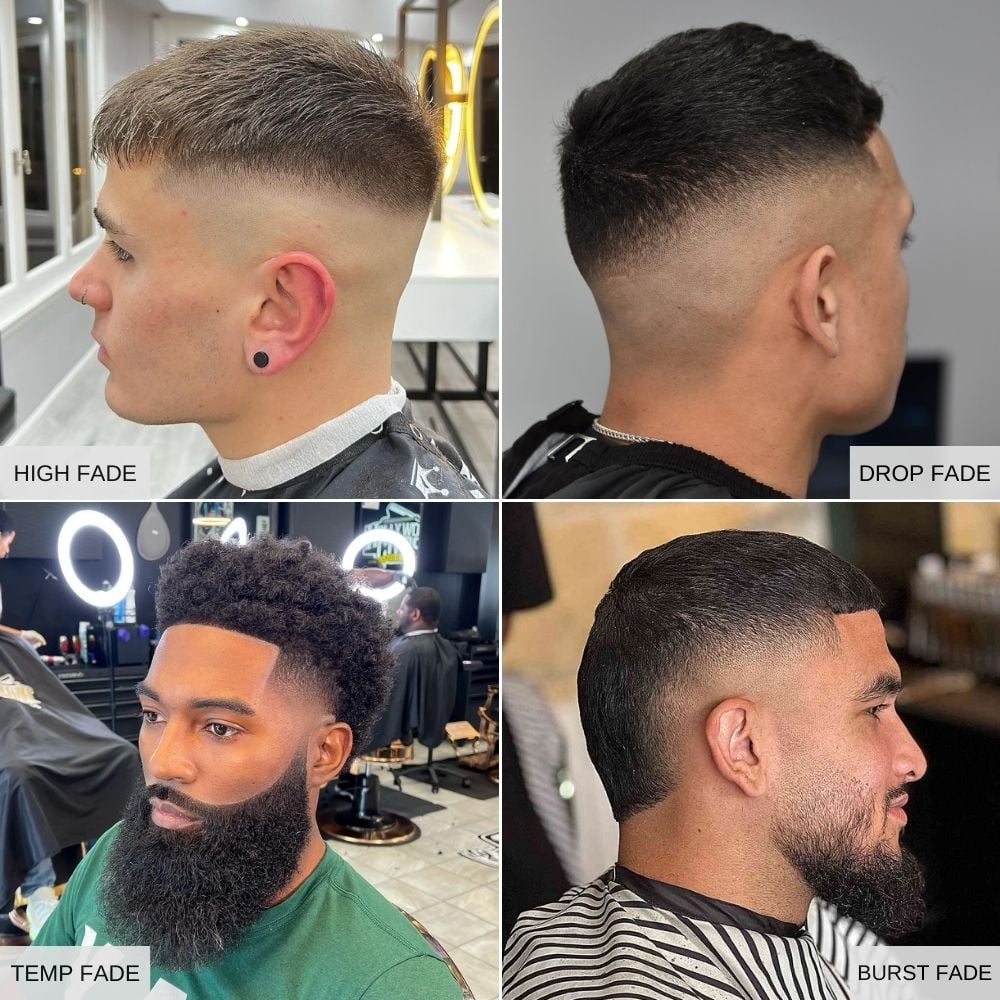
Your hair type is often the deciding factor when considering a low fade high fade haircut. Men with Afro-textured hair often find that a low fade provides a more natural, gradual look that complements the volume of their hair. Similarly, a well-executed curly hair fade can beautifully frame natural curls, whether tight or loose. Conversely, men with straight, fine hair often benefit from a high fade, as it removes the weight from the sides and prevents the hair from looking limp, effectively adding visual volume to the top.
How to Talk to Your Barber in 2026
Communication is the most important step in achieving the low fade high fade haircut you want. Don’t just ask for a “fade.” Use specific terminology to ensure your barber understands the exact transition you are looking for.
- Specify the Guard Number: If you aren’t sure how short you want to go, ask for a “number 1 or 2” on the sides. This gives you a clean look without exposing skin. If you want the skin-faded look, ask for a “skin fade” or a “zero fade.”
- Define the Height: Use your hands to show the barber where you want the fade to start. Pointing to your temple indicates a high fade; pointing just above your ear indicates a low fade.
- Bring Reference Photos: In 2026, visual aids are standard. Show your barber a high-resolution photo of the specific fade you want. This eliminates ambiguity and helps the barber understand your expectations.
Maintaining Your Fade: The Grooming Routine
A great low fade high fade haircut is only as good as its maintenance. To keep your low or high fade looking fresh throughout the month, consider these essential grooming tips:
Invest in Quality Hair Styling Products: For a high fade with a textured top, a matte clay or sea salt spray is essential to keep the hair looking voluminous and natural.
Edge-Up Maintenance: The “line-up” or “shape-up” is the finishing touch of a fade. If you have a steady hand, a precision trimmer can help you keep your hairline sharp between visits.
Scalp Care: With a high fade, more of your scalp is exposed to the elements. Ensure you are using a gentle, sulfate-free shampoo to prevent dryness and irritation on the exposed skin.
The Future of Fades: Trends for 2026 and Beyond
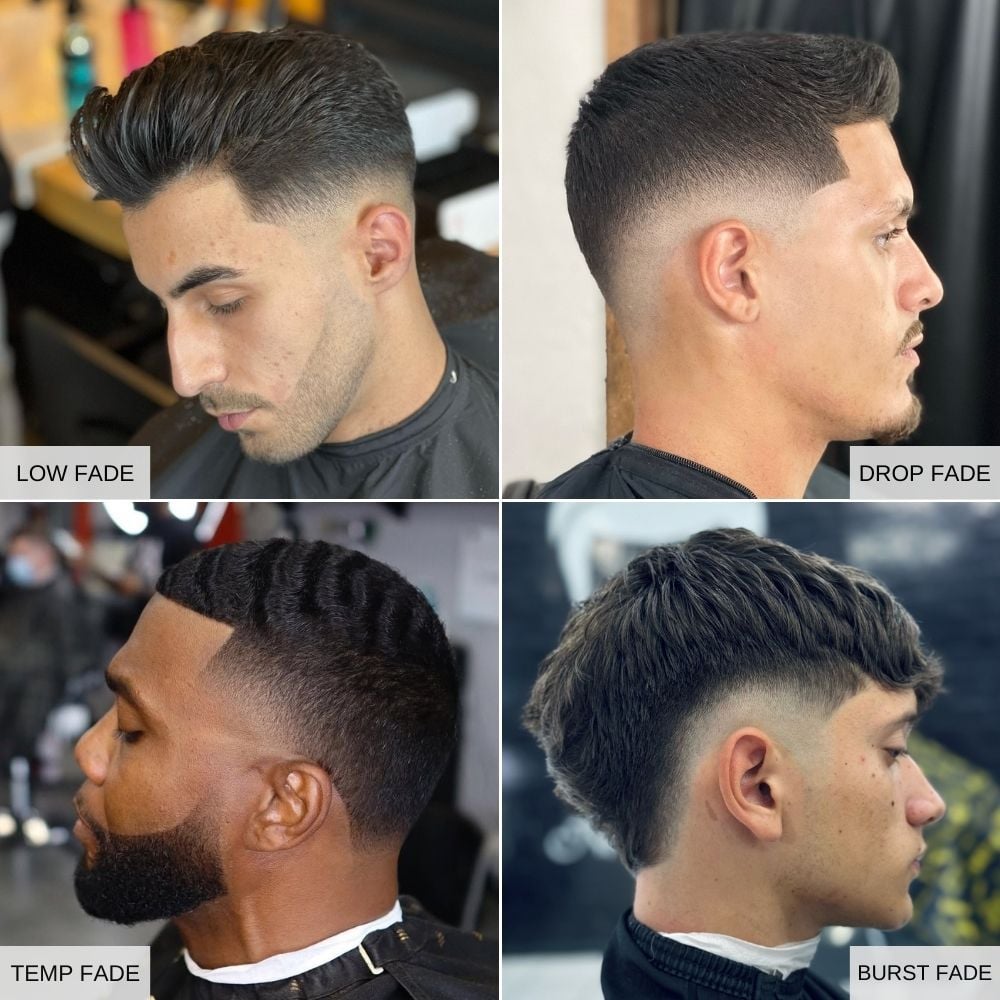
As we look at the trends for 2026, we are seeing a move toward “hybrid fades.” These innovative styles often incorporate elements of the classic low fade high fade haircut, with many men now opting for a “drop fade,” where the fade line curves behind the ear, or a “burst fade,” which is popular with those rocking mullets or mohawks.
Furthermore, sustainability is becoming a key focus in grooming. More men are looking for barbers who use eco-friendly, organic grooming products to maintain their fades. The shift is toward a healthier, more holistic approach to hair care that prioritizes scalp health alongside style.
Conclusion: Which Fade is Right for You?
Choosing between a low fade and a high fade haircut ultimately comes down to your personal style and how much maintenance you are willing to commit to. Each low fade high fade haircut offers distinct advantages. If you value a professional, versatile look that grows out gracefully, the low fade is your best bet. If you want a bold, high-contrast, and ultra-modern look that turns heads, the high fade is the superior choice.
Remember, the best haircut is the one that makes you feel the most confident. Don’t be afraid to experiment. Because hair grows back, you have the freedom to try a high fade this month and switch to a low fade the next. Consult with your barber, take into account your face shape and hair texture, and embrace the clean, sharp aesthetic that a quality low fade high fade haircut provides.
Whether you choose the understated elegance of the low fade or the sharp precision of the high fade, you are participating in a grooming tradition that defines the modern man in 2026. Mastering the low fade high fade haircut is a skill that barbers perfect over years. Keep your edges sharp, your hair nourished, and your style consistent, ensuring your chosen look stands out among all men’s fade hairstyles.