
The taper fade haircut curly hair combination has officially claimed its throne as the most versatile and sought-after among men’s curly hairstyles of 2026. For years, men with natural curls struggled to find a balance between “too messy” and “too high-maintenance.” The taper fade solves this dilemma by providing a sharp, structured frame with a short sides long top aesthetic that allows natural texture to take center stage.
In 2026, the trend has shifted away from the overly stiff, gel-heavy looks of the past. Instead, we are seeing a move toward enhancing natural hair movement, hydration-focused styling for textured hair, and precision barbering. Whether you have tight coils, loose waves, or dense ringlets, a taper fade offers a customized silhouette that enhances your facial features while keeping your morning grooming routine manageable.
In this comprehensive guide, we will explore why the taper fade haircut curly hair is the definitive choice for the modern man, the different variations available, and how to maintain that “fresh out of the chair” look for weeks.
Why the Taper Fade is Dominating 2026 Grooming Trends
The resurgence of the taper fade haircut curly hair, expertly crafted by a professional barber, isn’t accidental. As professional environments become more casual and personal expression becomes a priority in the workplace, the “clean-cut but textured” aesthetic has become the gold standard.
The Perfect Balance of Contrast
The beauty of a taper fade lies in the contrast, embodying the popular short sides long top aesthetic. By shortening the hair around the ears and the nape of the neck, you create a visual “lift.” This draws the eye upward to the volume on top, making your curls look more intentional and less chaotic.
Low Maintenance, High Impact
Unlike a full skin fade that might require a touch-up every week to stay sharp, a taper fade grows out more gracefully. In 2026, men are prioritizing longevity in their cuts. A well-executed taper blends into your natural hair growth, allowing you to go 3–4 weeks between barber visits while still looking polished.
Exploring the Variations: Which Taper is Right for You?
Not all taper fades are created equal. Depending on your lifestyle, face shape, and curl density, you might opt for a subtle transition or a bold statement.
1. The Low Taper Fade Curly Hair
The low taper fade is the “quiet luxury” of haircuts. It whispers rather than shouts. The fade starts very low, usually right at the sideburns and the very bottom of the nape.
Best For: Men who want a professional look or those who prefer a more “rounded” afro-inspired shape.
2026 Twist: Barbers are now using “invisible blends” where the transition from skin to hair is so seamless it looks like a natural shadow.
2. The Mid Taper Fade: The All-Rounder
The mid taper hits right above the ears. It provides more structure than the low taper but isn’t as aggressive as the high taper. This is the most popular version of the taper fade haircut curly hair because it works with almost every face shape.
Key Benefit: It provides excellent weight distribution, preventing the “mushroom” effect that often plagues curly-haired men as their hair grows out.
3. The High Taper Fade: Bold and Defined
For those who want maximum volume and a sharp, athletic look, the high taper is the way to go. The fade starts higher up on the temples, creating a clear distinction between the sides and the top.
Styling Tip: This looks exceptional when paired with a surgical line or a “hard part” to further define the transition.
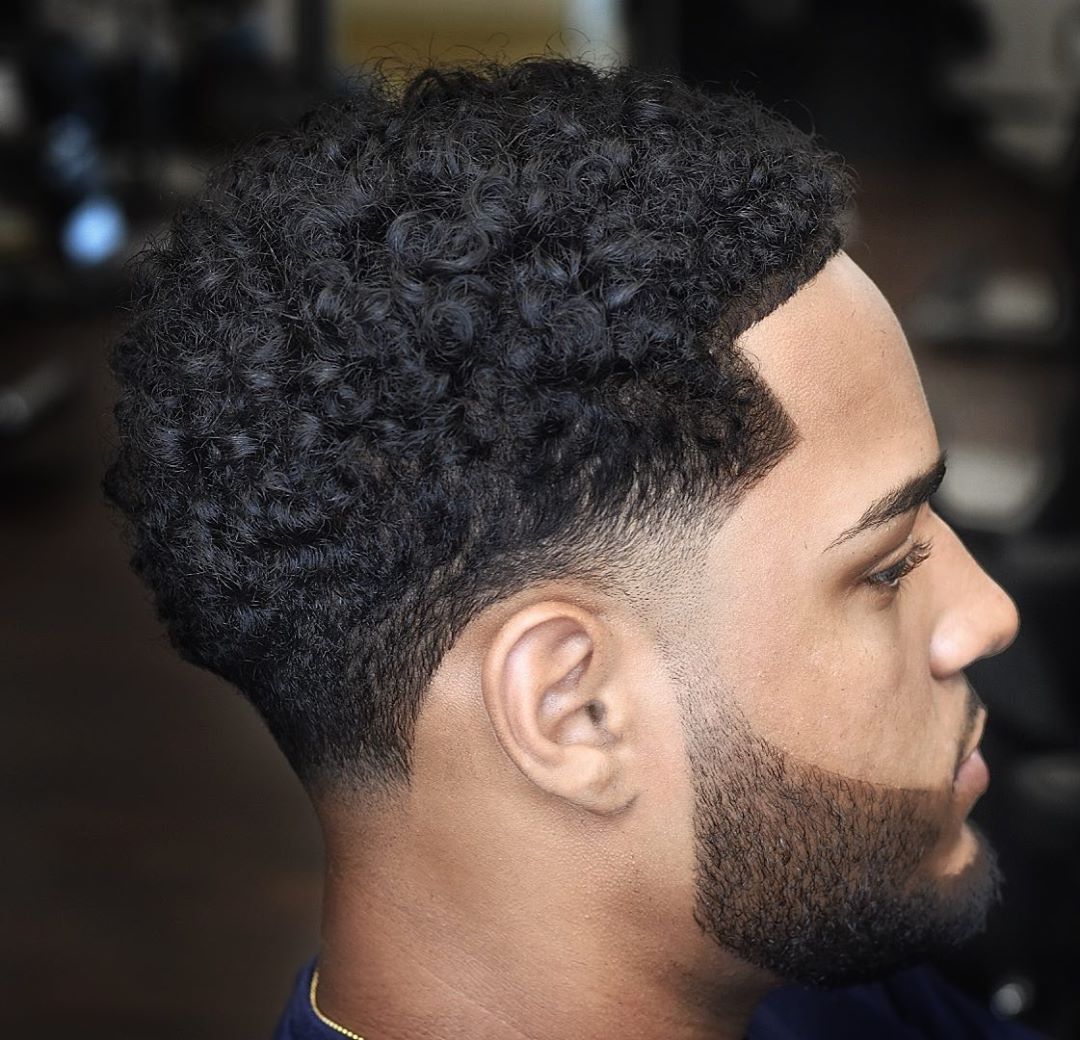
Matching Your Taper Fade to Your Curl Pattern
Understanding your specific curl pattern and hair type is crucial for the perfect taper fade haircut curly hair. In 2026, barbers are more educated than ever on the Andre Walker Hair Typing System, and you should be too.
Type 2: Wavy Taper Fade
If you have wavy hair, your goal is to prevent the hair from looking flat. A mid-to-high taper works best here to provide height. Use a light sea salt spray to add grit and “beachiness” to the top.
Type 3: Curly (Spiral) Taper Fade
For those with defined ringlets, the low taper is often the winner. It allows the curls to “drop” over the faded area slightly, creating a modern, effortless vibe. Hydration is your best friend—ensure you are using a leave-in conditioner to prevent frizz.
Type 4: Coily/Kinky Taper Fade
Coily hair offers the most structural integrity. This allows for geometric shapes, such as the tapered high-top or the curly buzz cut taper. In 2026, the “burst fade” (a taper that curves around the ear) has become a massive trend for Type 4 hair, offering a mohawk-lite silhouette.
The Technical Side: Precision Engineering for Curls
When you walk into a barbershop in 2026, you aren’t just getting a haircut; you’re getting an architectural adjustment. A professional barber will consider the hairline cleanup, the occipital bone, and the temporal peaks, often employing precise clipper over comb techniques, before even picking up the clippers.
Key Technical Elements of a 2026 Taper Fade:
- The C-Stroke: Barbers use a flicking motion to ensure the taper doesn’t have “steps.”
- Detailing the Nape: A tapered nape is often left slightly natural in 2026, rather than a harsh straight line, to allow for a softer grow-out.
- The “Crunch” Factor: Avoid it. Modern styling products used by pros are water-based and “touchable.”
Maintaining the Look: The 2026 Product Guide
The secret to a great taper fade haircut curly hair isn’t just the cut—it’s the maintenance and the right hair styling products. Curls are naturally drier than straight hair because scalp oils have a harder time traveling down the spiral shaft.
The “No-Poo” Movement
By 2026, most men with curly hair have moved away from traditional shampoos. Instead, use a co-wash (conditioning wash). This cleanses the scalp without stripping the natural oils that keep your fade looking vibrant and your curls looking bouncy.
Essential Product Stack:
Leave-in Conditioner: Apply to soaking wet hair for moisture retention.
Curl Defining Cream: Use a nickel-sized amount to clump curls together and eliminate frizz.
Lightweight Hair Oil: (Argan or Jojoba) to seal the cuticles and add a healthy shine to the faded sections.
The Curling Sponge: For shorter curly tapers, a sponge can help define the texture in seconds.
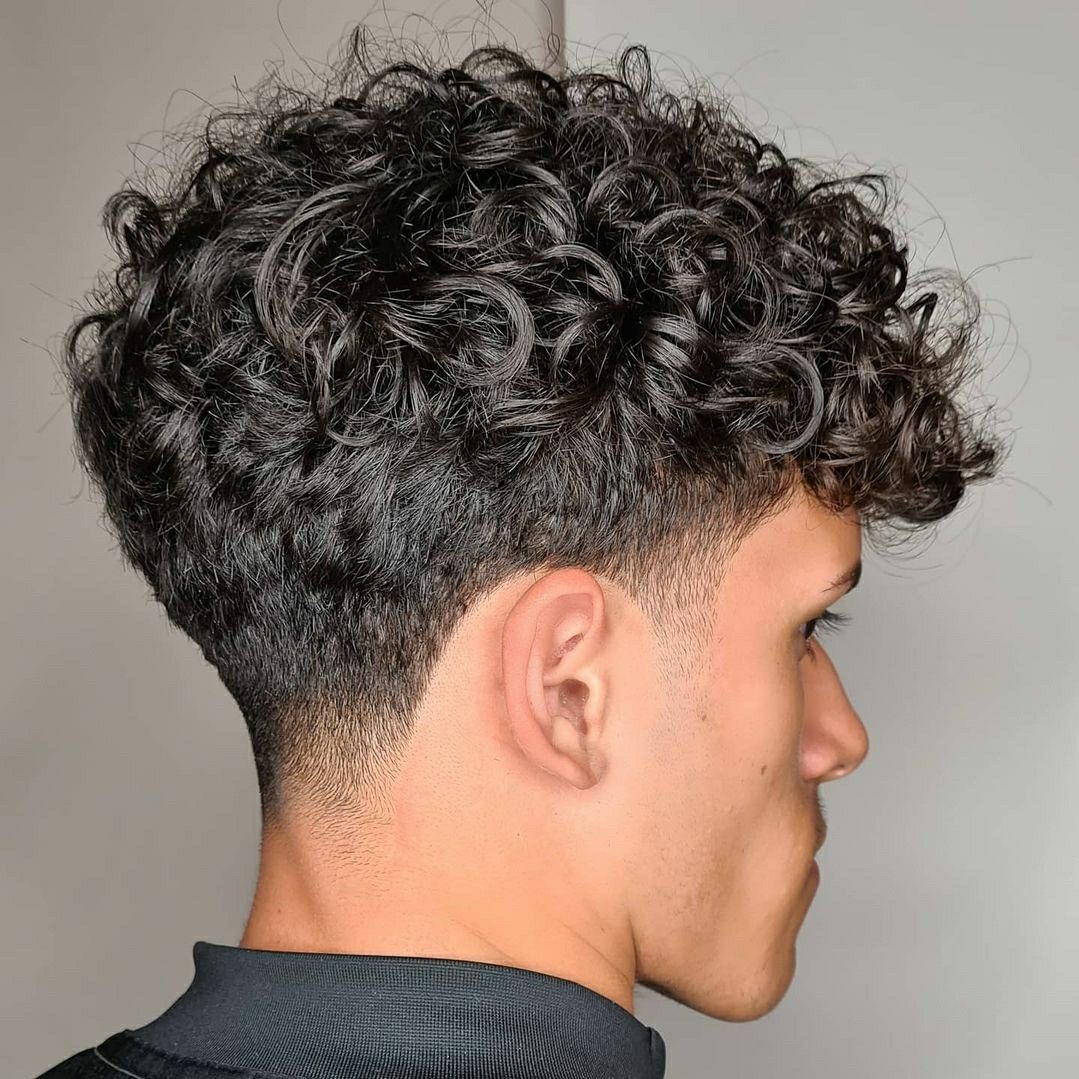
Face Shape and the Taper Fade: A Strategic Choice
Your face shape should dictate the height and sharpness of your taper.
Round Face: Go for a high taper fade with more volume on top. This creates an elongated effect, making the face appear slimmer.
Square Face: A mid taper complements a strong jawline. Keep the edges sharp to mirror the angularity of your face.
Oval Face: You are the lucky ones. Almost any taper fade haircut curly hair variation will look balanced on you.
Heart/Diamond Face: Stick to a low taper. You want to avoid adding too much width to the top of the head, so keep the curls medium-length and the fade subtle.
2026 Styling Innovation: The “Air-Dry” Revolution
One of the biggest shifts in 2026 is the rejection of the blow-dryer for curly hair. Heat damage is out; air-drying with “plopping” techniques is in.
After your shower, instead of rubbing your hair with a towel (which causes frizz and ruins the taper’s crispness), use a microfiber cloth to gently scrunch out the water. Apply your products and let the air do the work. This preserves the natural “clumping” of your curls, making the contrast with your faded sides look even more dramatic.
The Role of the Barber in Styling Education
In 2026, a top-tier barber doesn’t just cut; they coach. During your appointment, ask your barber to show you the “rake and shake” method or how to properly apply product to the crown vs. the fringe.
Common Mistakes to Avoid
Even with a great barber, things can go wrong if you aren’t careful.
- Going Too High: If you have a long face, a high taper can make your head look disproportionately tall.
- Ignoring the Beard: A taper fade haircut curly hair looks best when the sideburns are “disconnected” or “tapered” into the beard. Don’t let your beard be a separate entity; blend it for a cohesive look.
- Over-Producting: If your hair looks wet or crunchy, you’ve used too much. 2026 is about matte or natural shine finishes.
- Neglecting the Scalp: A fade draws attention to the skin. If you have dandruff or a dry scalp, it will be visible. Use a scalp scrub once a week to keep the skin in the faded area healthy.
Frequently Asked Questions (FAQ)
How often should I get a taper fade for curly hair?
To keep it looking sharp, every 2 to 3 weeks. However, a taper fade is designed to look good even as it grows, so you can push it to 4 weeks if you are maintaining the curls on top well.
Can I get a taper fade if my hair is thinning?
Yes! In fact, a taper fade is a great way to hide thinning. By shortening the sides, you make the hair on top appear thicker and more voluminous by comparison.
Does a taper fade work for long curly hair?
Absolutely. The “Man Bun Taper” or “Long Curly Fringe Taper” are massive trends for 2026. It allows you to keep your length while removing the bulk from the sides, preventing a “messy” appearance.
Conclusion: Embracing Your Natural Texture
The taper fade haircut curly hair is more than just a trend; it’s a standout among men’s curly hairstyles, a celebration of natural texture combined with the precision of modern grooming. As we move through 2026, the emphasis remains on individuality. Your curls are unique, and your haircut should reflect that.
By choosing the right taper height, understanding your curl pattern, and committing to a hydration-first maintenance routine, you can achieve a look that is both effortless and sophisticated. Whether you’re heading into a boardroom or a weekend festival, the taper fade ensures you do so with confidence.
Ready to transform your look? Take one of the images from this guide to your barber and start your journey toward the perfect curly taper today.