
In 2026, the definition of “aging gracefully” has been completely rewritten. No longer are men over 50 or 60 expected to settle for uninspired, “safe” haircuts that lack character. Instead, the modern mature gentleman is embracing precision, structure, and style. At the forefront of this grooming revolution is the fade haircut for older men.
Once viewed as a style reserved for athletes or the younger generation, the fade has evolved into a versatile tool for the mature man. It offers a way to manage thinning hair, accentuate facial features, and celebrate the natural transition to silver or salt-and-pepper tones. Whether you are aiming for a professional executive look or a rugged, outdoorsy vibe, the fade provides a clean foundation that screams confidence.
In this comprehensive guide, we will explore why the fade is the premier choice for men in 2026, the best variations for different hair textures, and how to maintain a look that balances sophistication with a contemporary edge.
Why the Fade is the Gold Standard for Mature Grooming in 2026
The fade isn’t just a trend; it is a structural technique that solves many of the common hair challenges men face as they age. By 2026, barbering technology and techniques have advanced, allowing for a more tailored approach to the “silver fox” aesthetic.
1. It Creates an Instant “Face Lift”
As we age, skin can lose some of its elasticity. A well-executed taper fade or low fade draws the eyes upward. By keeping the hair tight on the sides and back, the haircut emphasizes the cheekbones and jawline, providing a slimming and lifting effect to the face.
2. It Disguises Thinning Hair
One of the biggest concerns for men over 50 is thinning at the temples or the crown. A fade works by reducing the contrast between the hair and the scalp on the sides. This trick of the eye makes the hair on top appear thicker and more voluminous by comparison.
3. It Highlights Natural Gray Tones
Gray hair often has a different texture—it can be coarser or more wiry. A fade removes the bulk from the sides where gray hair often looks the most “unruly,” allowing the salt-and-pepper patterns on top to become a deliberate style choice rather than an accident of age.
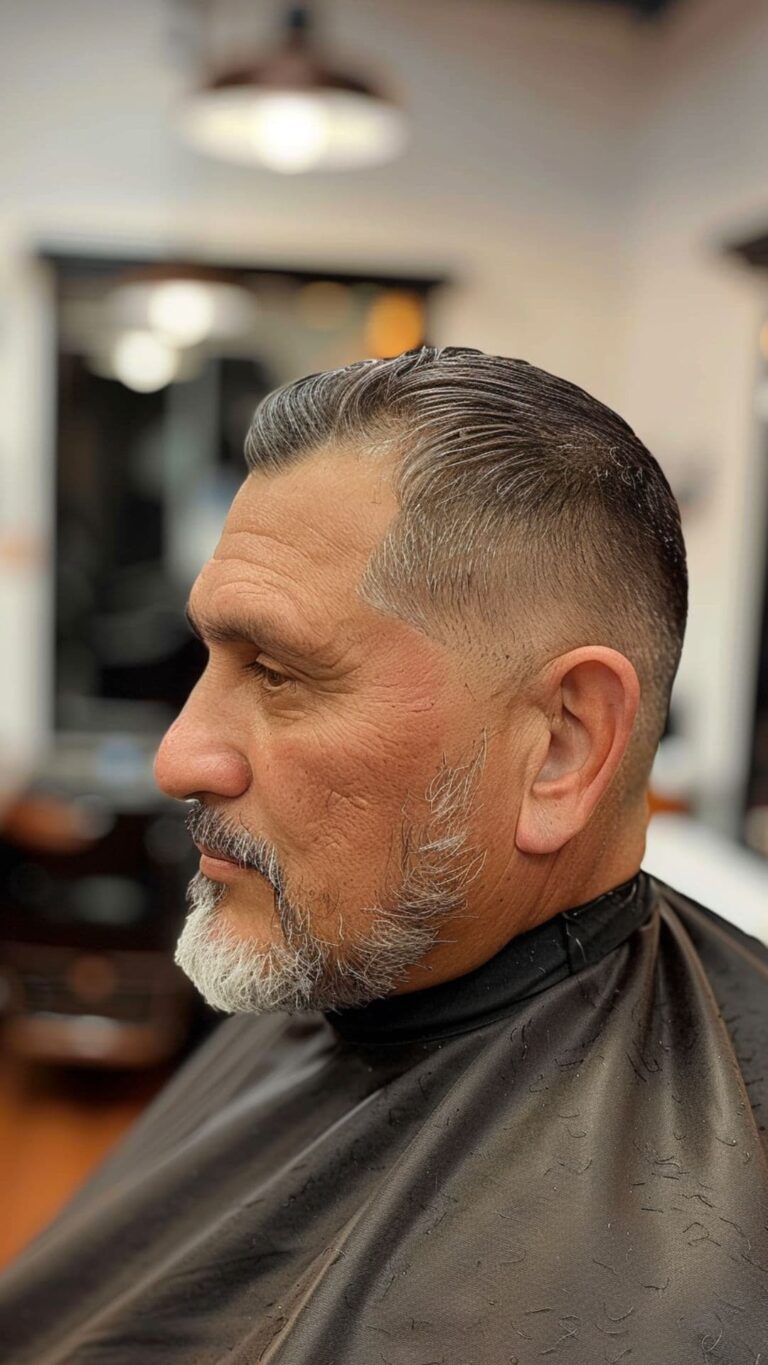
Top Fade Variations for Men Over 50 and 60
Choosing the right fade depends on your lifestyle, hair density, and personal brand. Here are the most sought-after styles in 2026.
The Classic Low Taper Fade
The low taper fade is the pinnacle of understated elegance. It involves a subtle shortening of the hair around the ears and the nape of the neck. This style is perfect for the corporate professional who wants a clean finish without the “skin-showing” intensity of a high fade. It pairs beautifully with a traditional side part or a soft pompadour.
The Mid-Fade with Textured Top
The mid-fade hits right at the temple and follows a line around the back of the head. In 2026, the “textured top” is the preferred companion for this cut. Using a matte clay or paste, the hair on top is styled to look effortless and slightly messy. This adds a youthful energy to the look while remaining age-appropriate.
The Skin Fade (Bald Fade) for the Bold
For men who have embraced a more rugged or “street-style” aesthetic, the skin fade is a powerful choice. It involves tapering the hair down to the skin. This is particularly effective for men with a full head of silver hair or those who wear a well-groomed beard. The high contrast between the skin and the hair creates a sharp, intentional silhouette.
The Side Part Fade
This is the “Old Hollywood” look updated for the 2020s. By incorporating a hard part (a shaved line) or a deep natural part into a fade, you create a look that is both structured and authoritative. It is the go-to style for men who want to look like the smartest person in the room.
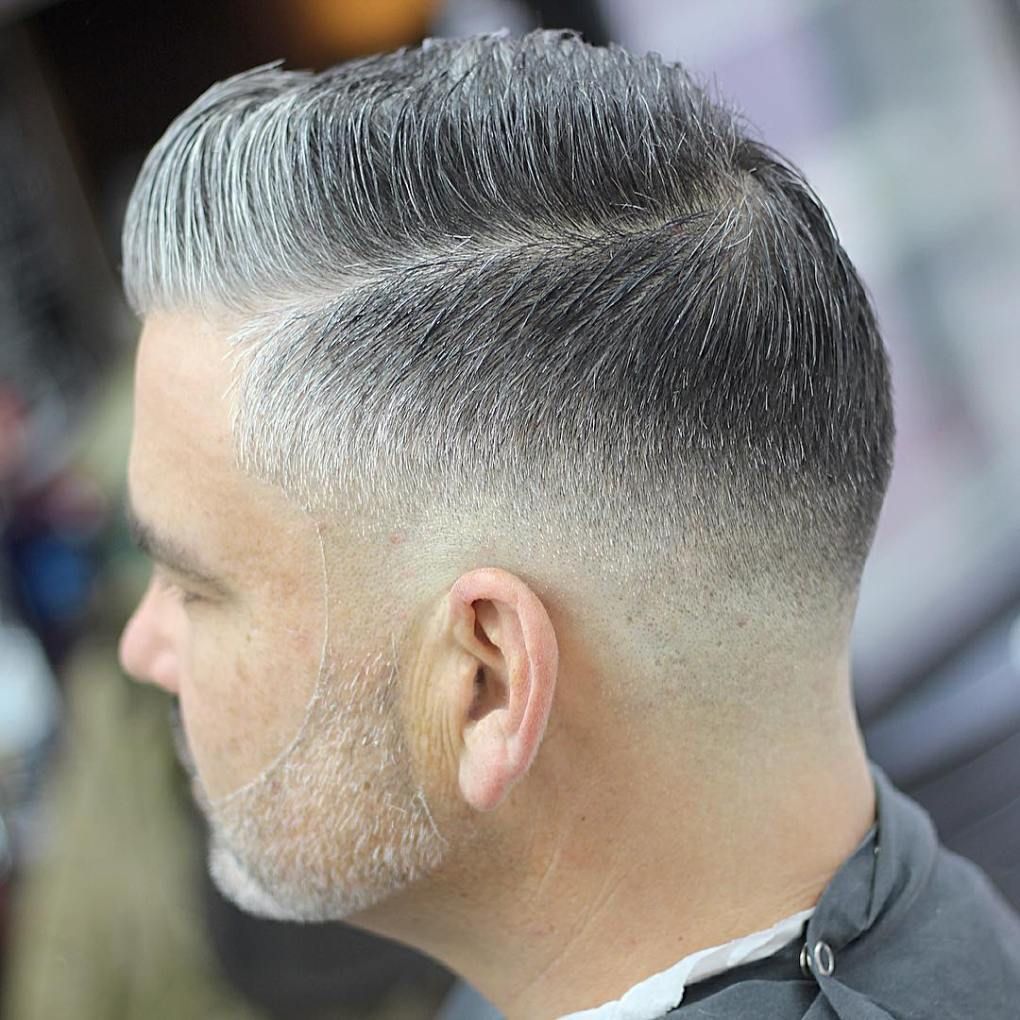
How to Choose a Fade Based on Your Face Shape
In 2026, barbers emphasize “bespoke grooming.” A fade should never be “one size fits all.” Understanding your face shape is key to selecting the most flattering cut.
Oval Face: You are in luck. Most fade styles work for you. A mid-fade with a quiff can help add a bit of height.
Round Face: Aim for a high fade with more volume on top. This elongates the face and reduces the appearance of roundness in the cheeks.
Square Face: A low to mid-taper fade complements a strong jawline. Keep the corners of the hair on top slightly rounded to balance the sharp angles of your face.
Heart/Triangular Face: Avoid too much height on top. A low fade that maintains some bulk on the sides can help balance a narrower chin.
Managing Gray and Thinning Hair with a Fade
By the time men reach their 50s and 60s, hair biology changes. The production of melanin slows down, and the hair follicles may shrink. Here is how the fade addresses these specific 2026 grooming needs:
The “Silver Power” Strategy
Gray hair reflects light differently than pigmented hair. A fade creates shadow and depth. By transitioning from skin or very short hair to the longer gray hair on top, you create a gradient that looks rich and intentional. Many men in 2026 are opting for “silver enhancers”—toners that remove yellow brassiness from gray hair—to make their fade look even crisper.
Dealing with Receding Temples
If your hairline is retreating, a high fade can actually be your best friend. By taking the sides up high, the receding areas at the temples blend into the fade, making them look like part of the haircut’s design rather than a loss of hair.
Volume in a Bottle
To complement a fade, men in 2026 are using volumizing powders and biotin-infused styling creams. These products provide the “lift” needed on top to ensure the fade doesn’t make the head look flat.
The Beard Connection: Fading into Facial Hair
One of the most significant trends in 2026 for older men is the beard fade. A beard adds a sense of maturity and ruggedness, but it must be integrated correctly with the haircut.
The “beard fade” involves tapering the sideburns so that the hair on the head seamlessly transitions into the facial hair. This prevents the “floating beard” look and creates a cohesive, groomed appearance from the top of the head to the chin.
Short Stubble: Pairs best with a low taper.
Full Silver Beard: Pairs exceptionally well with a mid to high skin fade.
Goatee: Best suited for a classic side part fade to maintain a vintage feel.
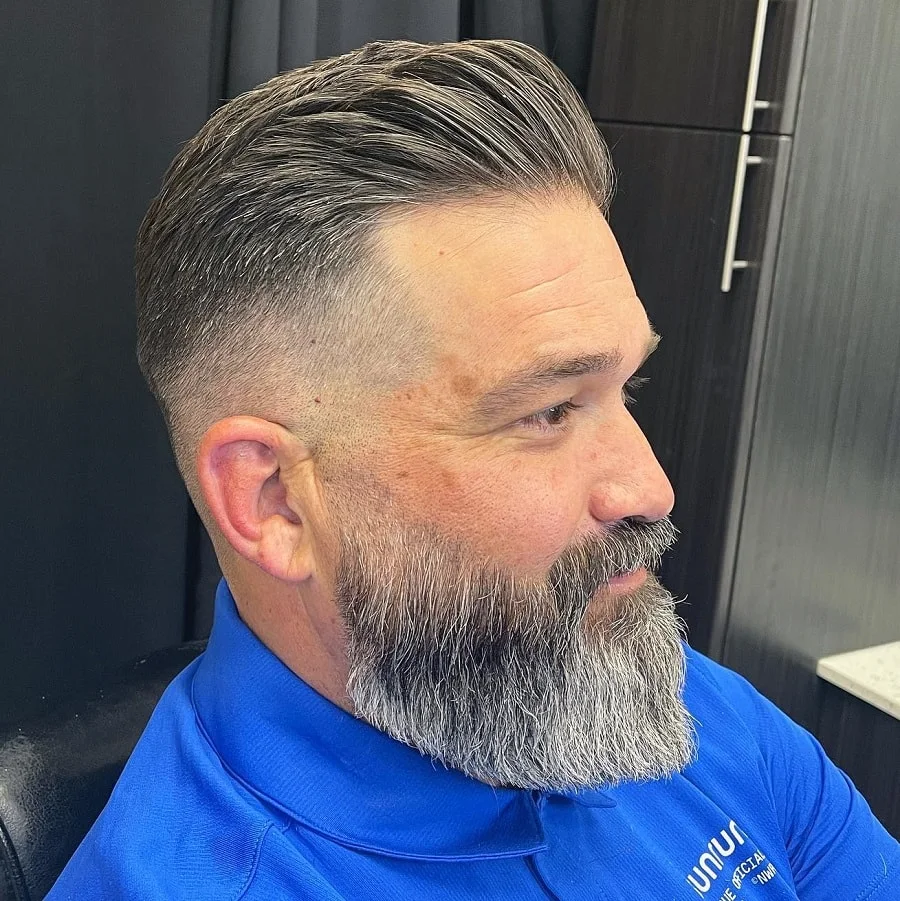
Professional Maintenance: Keeping the Look Sharp
A fade is a high-precision haircut, which means it requires regular upkeep. To maintain the “fresh out of the chair” look in 2026, follow these guidelines:
- Frequency: For a skin fade, visit your barber every 2 to 3 weeks. For a classic taper, you can stretch it to 4 weeks.
- Home Care: Invest in a high-quality t-outliner or beard trimmer to clean up the hair on the back of your neck and around your ears between professional visits.
- Scalp Health: As hair thins, the scalp becomes more visible. Use a moisturizing scalp serum to prevent flakiness, which can be very obvious in a fade.
- Sun Protection: With shorter sides, your scalp is more exposed to UV rays. In 2026, many styling pomades now include SPF protection—use them!
Communicating with Your Barber
The most common mistake older men make is being too vague at the barbershop. To get the best results in 2026, use specific terminology:
Specify the “Start” Point: Tell the barber exactly where you want the fade to begin (Low, Mid, or High).
The “Finish” Grade: Do you want it down to the skin (#0), or would you prefer a bit of shadow (#1 or #2)?
Top Length: Mention if you want to use shears (for a softer, natural look) or clippers (for a more uniform, buzzed look) on the top.
The “Nape” Style: Ask for a “tapered” nape rather than a “blocked” one for a more natural regrowth pattern.
The Psychology of the Fade: Confidence in the Next Chapter
There is a psychological shift that happens when a man over 50 gets a sharp fade. It signals to the world—and to himself—that he is still in the game. It is a rejection of the “invisible” status often forced upon seniors.
In 2026, the “Old Man Fade” is no longer a pejorative term; it is a mark of a man who understands his worth and takes pride in his presentation. Whether you are leading a boardroom, traveling the world, or enjoying retirement, a fade offers a sense of discipline and modernity.
Key Takeaways for 2026:
Versatility: Fades work for all hair types, from curly to straight.
Modernity: It is the quickest way to update your look without looking like you’re “trying too hard.”
Practicality: Short sides mean less time styling in the morning and a cooler feel in warmer climates.
Conclusion
The fade haircut for older men has solidified its place as the most versatile and flattering style of 2026. By combining traditional grooming values with modern barbering techniques, it offers a solution for every hair concern and every lifestyle.
Whether you choose a conservative low taper or a daring high skin fade, the key is confidence. Embrace your silver, manage your texture, and don’t be afraid to sit in that barber’s chair and ask for a look that reflects the vibrant, experienced man you are today. Age is a number, but style is eternal.