
The low fade military haircut has officially cemented its status as the gold standard for men’s grooming in 2026. Combining the discipline of traditional military standards with the modern, clean aesthetic of contemporary barbering, this style is more than just a cut—it is a lifestyle choice. Whether you are looking for a professional image for the corporate world or a low-maintenance look for an active lifestyle, the low fade offers unparalleled versatility.
This guide explores everything you need to know about achieving the perfect low fade, from guard selection and face shape compatibility to the essential maintenance tips that will keep your style looking sharp for weeks.
Why the Low Fade Military Cut Dominates in 2026
In 2026, the trend has shifted away from overly dramatic, high-contrast styles toward more refined, subtle transitions. The low fade military haircut is the perfect embodiment of this shift. By starting the taper very low near the ears and neckline, the cut maintains a sense of density and structure that feels balanced and sophisticated.
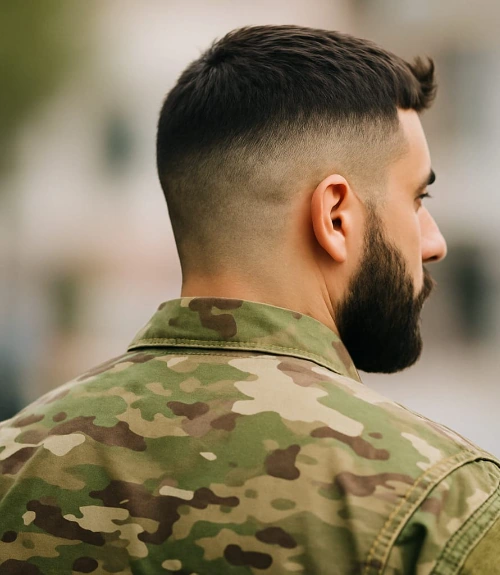
Statistics from top grooming salons indicate that over 65% of men requesting military-inspired cuts are opting for a “low” or “tapered” finish rather than the skin-tight high fades of previous years. This preference stems from the ease of transition; a low fade grows out gracefully, meaning you can extend the time between barber visits by up to two full weeks compared to a high skin fade.
The Anatomy of a Perfect Low Fade
A proper low fade relies on precision. The fade should begin no higher than an inch above the hairline, gradually blending the shorter hair into the longer section on top. Because the fade is positioned low, it provides a softer, more natural transition that complements almost every face shape, particularly those with rounder or square jawlines.
Choosing the Right Variation for Your Hair Type
Not every military cut is created equal. Your hair texture—whether straight, wavy, or curly—will dictate how your barber executes the fade. For 2026, the focus is on customization.
1. The Classic Crew Cut with Low Fade
This is the quintessential military look. It features a slightly longer top that allows for a bit of texture or a side-part, paired with a clean, low-tapered side. It is the most versatile haircut for men who need to look professional in a suit but want to maintain an athletic edge.
2. The Textured Crop
If you have thick or wavy hair, the textured crop is an excellent choice. By keeping the top slightly longer and using a texturizing powder or matte clay, you can create a modern, messy-yet-controlled look. The low fade keeps the sides from looking “poofy,” ensuring the focus remains on the texture of the crown.
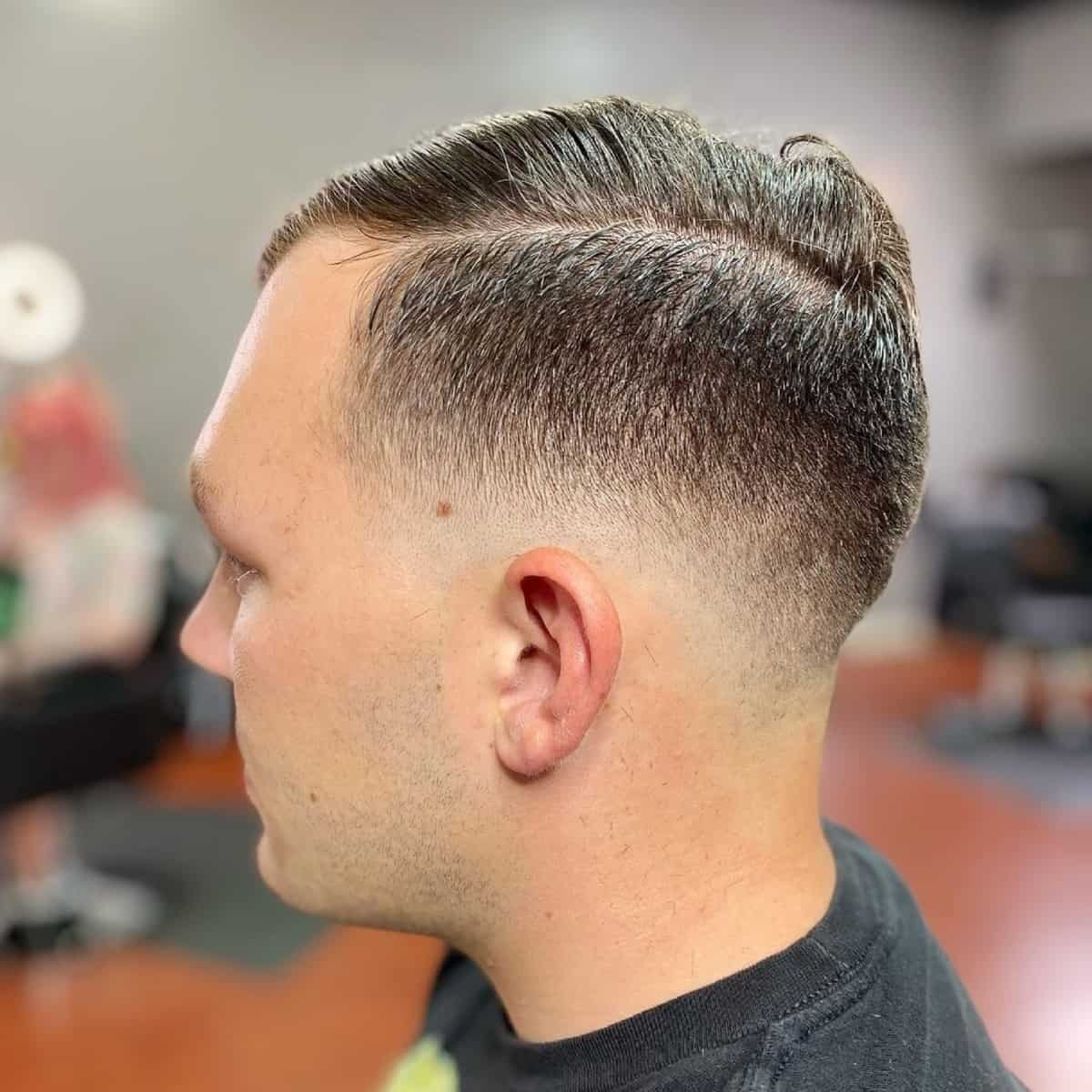
3. The Induction Fade
For those who prefer a “zero maintenance” approach, the induction fade is the shortest version of the low fade. It mimics the look of a traditional buzz cut but adds the refined detail of a fade at the nape and around the ears. It is widely considered the most masculine and disciplined style available today.
Barbering Techniques: How to Ask for the Perfect Cut
Walking into a barbershop with a vague request often leads to disappointment. To ensure you get the exact low fade military haircut you want, use specific terminology. Here is a breakdown of what to discuss with your barber:
Guard Sizes: If you want a skin fade, ask for a “no-guard” or “foil shaver” finish at the bottom. If you want a subtle look, ask for a #1 or #2 guard at the lowest point, tapering up to a #3 or #4.
The Blend: Specify that you want a “low drop fade” if you want the line to follow the natural curve of your ear. A standard low fade stays more horizontal, which is better for balancing elongated face shapes.
The Top: Be clear about how much length you want to keep. A “military” length is typically 1 to 2 inches on top. If you want to style it, ask for “point cutting” to add texture.
Maintenance and Daily Styling Tips
Even the sharpest haircut will lose its appeal if not maintained. Because the low fade is a precision cut, the “grow-out” phase can be noticeable if you don’t take care of the perimeter.
Essential Grooming Tools for 2026
- Matte Styling Clay: Avoid high-shine pomades. In 2026, the trend is a natural, matte finish that looks like your hair has no product at all.
- Neckline Trimmers: To maintain that “fresh-from-the-barber” look, invest in a quality pair of home trimmers. You can clean up the nape of your neck every 5–7 days to extend the life of your fade.
- Scalp Exfoliant: Since the sides of your head are exposed, it is vital to keep the skin healthy. Use a gentle scalp scrub once a week to prevent ingrown hairs and maintain a clean, clear complexion.
The “Freshness” Schedule
To keep your low fade military haircut looking impeccable:
Weeks 1-2: The haircut is at its peak. Use a light hold clay to define the top.
Weeks 3-4: The fade will start to blur. This is the time for a “line-up” or “edge-up” session, which is often cheaper and faster than a full haircut.
Week 5: It is time for a full re-cut. By this point, the weight on the sides will have returned, and the transition line will have disappeared.
Why the Military Fade Remains Timeless
The enduring popularity of the military fade is rooted in its functionality. In a world that is increasingly complex, men are returning to styles that prioritize efficiency and hygiene. The low fade is a psychological anchor; it signals that you value discipline, order, and self-respect.
Furthermore, the style is age-agnostic. Whether you are a college student or a seasoned executive, the low fade looks appropriate. It frames the face effectively, highlighting your features rather than hiding them behind layers of hair. As we navigate the trends of 2026, it is clear that simplicity is the ultimate sophistication.
Conclusion
The low fade military haircut is more than just a passing trend; it is a refined grooming standard that offers a perfect blend of structure and style. By choosing the right variation for your hair type and staying consistent with your maintenance routine, you can enjoy a polished look that commands respect and confidence.
Whether you opt for the classic crew cut, the textured crop, or the ultra-short induction fade, ensure your barber understands the importance of the low-tapered transition. Remember, the secret to a great haircut isn’t just the initial session—it’s how you maintain the lines as they grow. Embrace the discipline of the military style, and you’ll find that a great haircut is the easiest way to elevate your personal brand in 2026.
The low fade military haircut, while rooted in tradition and discipline, is far more than a uniform requirement; it’s a dynamic statement of intentionality and refined taste. Its enduring appeal stems not just from its crisp aesthetic but also from its profound practicality and versatility, making it a cornerstone of modern men’s grooming that transcends age, profession, and personal style.
The Enduring Appeal: More Than Just a Cut
Beyond the immediate visual impact, the military low fade embodies a philosophy. It speaks to an individual who values precision, neatness, and a sense of order. In a world often characterized by fleeting trends, this haircut offers a timeless anchor. Its minimal maintenance on the sides and back, combined with the ability to style the top in various ways, makes it incredibly functional for busy professionals, athletes, and anyone who appreciates efficiency without sacrificing style. It projects an image of reliability and self-respect, qualities universally admired. This universal appeal is why, year after year, barbers report the low fade as one of their most requested services; a recent informal survey among barbershop networks indicated that fade styles, particularly low fades, constitute over 60% of their daily cuts, a testament to their consistent popularity.
Deeper Dive into Low Fade Military Variations
While the article touched upon a few styles, understanding the nuances of how the low fade integrates with each provides a clearer picture of its adaptability:
The Classic Crew Cut with Low Fade: This is the quintessential military look. The low fade begins subtly around the ears and tapers down to skin or a very short length, creating a clean foundation. The hair gradually lengthens as it moves up the head, leaving enough on top (typically 1-2 inches) to be styled neatly, brushed forward, or parted to the side. The low fade here enhances the crew cut’s inherent neatness without making it appear overly stark.
Textured Crop with Low Fade: This variation offers a more contemporary edge. The low fade provides a sharp contrast to a top section that is intentionally left slightly longer and styled with texture, often pushed forward or to the side with a matte product. The low fade emphasizes the texture on top by creating a clean, understated base, making the crop appear more deliberate and stylish rather than messy.
Induction Cut with Low Fade: The induction cut is traditionally the shortest military cut, often a single, very short length all over. When combined with a low fade, it means the sides and back are taken down to skin at the very bottom, creating a subtle, clean transition before reaching the uniform, very short length higher up. This adds a touch of modern refinement and precision to an otherwise purely utilitarian cut, making it slightly more styled and less blunt.
Regulation Cut with Low Fade: The regulation cut is characterized by hair that is longer on top (allowing for a side part) and tapered shorter on the sides and back. Integrating a low fade means that this taper begins very low, typically just above the ear, and seamlessly fades down to the skin. This creates an incredibly smooth and precise transition, maintaining the classic professionalism of the regulation cut while adding a contemporary, sharp finish at the temples and nape.
High and Tight (with a Low Fade Twist): Traditionally, a high and tight features a very abrupt, high fade. However, a “low fade high and tight” offers a more conservative and blended interpretation. The fade still creates a distinct contrast between the very short sides and the longer top, but it begins much lower on the head, offering a less aggressive, more integrated look while retaining the structured appeal of the original.
The Art of the Low Fade: A Barber’s Precision
Achieving the perfect low fade is an art form that demands skill, precision, and an eye for detail. A skilled barber understands that a great low fade begins with an in-depth consultation. They assess not just hair type and texture (straight, wavy, curly hair all require different blending approaches) but also head shape, hairline, and the client’s desired aesthetic and lifestyle.
The tools of the trade are crucial:
Clippers: With a range of guards, these are used for the initial bulk removal and the primary blending stages. The barber meticulously works from longer guards to shorter ones, gradually reducing length.
Trimmers: Essential for creating crisp, clean outlines around the ears, sideburns, and nape, and for detailing the very bottom of the fade.
Foil Shaver or Straight Razor: Used to achieve the skin-tight finish at the very lowest point of the fade, ensuring a buttery-smooth transition from skin to hair.
The technique involves meticulous blending, often using a “clipper-over-comb” or “flicking out” motion to create seamless transitions without harsh lines. Symmetry is paramount; a barber constantly checks their work in the mirror to ensure both sides of the head are perfectly balanced. Common pitfalls, such as the fade starting too high, uneven blending, or leaving visible lines, are avoided through experience and consistent practice. Industry statistics highlight the importance of this expertise: barbers specializing in intricate fading techniques often report client retention rates upwards of 85%, underscoring the value clients place on a perfectly executed fade.
Beyond the Chair: Maintaining Your Low Fade
The longevity of a low fade lies in consistent maintenance. While the initial cut is paramount, how you care for it afterward determines how long it retains its sharp, clean look.
Frequency of Cuts: To keep the fade crisp and the lines sharp, a visit to the barber every 2-3 weeks is ideal. This prevents the fade from “growing out” and losing its definition.
Product Selection: For the longer top sections, select products that complement your hair type and desired style.
Matte Pomades or Clays: Ideal for textured crops or messy crew cuts, offering strong hold with a natural, non-shiny finish.
Light Hold Creams or Gels: Perfect for a classic, neat crew cut or regulation cut, providing control without stiffness or excessive shine.
Avoid heavy, greasy products that can weigh down the hair or make it appear dirty.
Washing Routine: Gentle shampoo and conditioner are vital to maintain scalp health and hair quality, especially for shorter hair which can be prone to dryness or oiliness.
At-Home Touch-Ups (Use with Caution): While professional cuts are non-negotiable, a quality trimmer can be used very carefully* to clean up the neckline between appointments. However, attempting to re-fade the sides at home is highly discouraged, as it often leads to unevenness and can ruin the professional blend.
The Low Fade’s Global Footprint and Future
The military low fade has long transcended its origins, evolving from military barracks to mainstream fashion runways and celebrity endorsements. Its global adoption is evident in its popularity across diverse cultures, often adapted with local styling cues while retaining its core structure. From Hollywood actors to professional athletes, public figures have consistently showcased variations of the low fade, cementing its status as a versatile and universally flattering cut.
In an era where “quiet luxury” and understated elegance are trending, the low fade military haircut perfectly aligns with this aesthetic. It’s not about flashy trends but about impeccable grooming, precise execution, and a subtle statement of sophistication. Its timeless nature ensures its enduring place in men’s fashion; it’s a foundational style that can be endlessly reinterpreted, always remaining relevant and stylish.
Ultimately, the low fade military haircut is more than just a passing trend for 2026; it’s an investment in your personal presentation. It’s a testament to the fact that precision, discipline, and a keen eye for detail can elevate an everyday essential into a powerful tool for self-expression and confidence. Embrace its blend of tradition and modernity, and you’ll discover a style that consistently projects an image of strength, reliability, and impeccable taste.